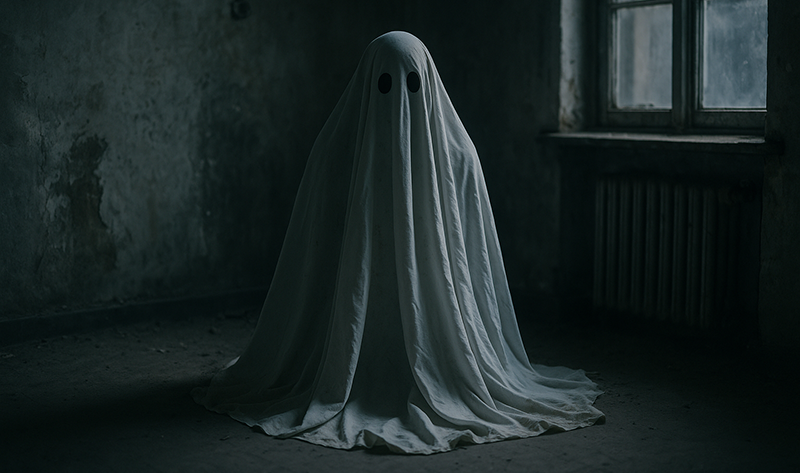
Throughout human history, unexplained events, mysterious sounds, ghostly silhouettes, and eerie experiences have revolved around one central question: Are ghosts real? This question has intrigued not only horror storytellers and filmmakers but also scientists, researchers, and curious minds. In this article, we’ll explore the phenomenon of ghosts from scientific, cultural, and psychological perspectives to shed light on this enduring mystery.
What Is a Ghost?
A ghost is commonly believed to be the spirit of a deceased person that continues to exist in the earthly realm. While some cultures may refer to similar entities as spirits, jinn, or phantoms, in modern terms, a ghost is typically described as a non-physical presence that may be seen, heard, or felt in certain places.
Ghost Beliefs Across Cultures
Belief in ghosts is found across nearly every culture on Earth. From Japan to Egypt, from Anatolia to Scandinavia, various societies believe that the spirits of the dead may remain in or return to the living world under certain conditions. In Japanese folklore, for example, “yurei” are ghosts who return to settle unfinished business or take revenge. Similarly, in Ottoman-era tales, stories of souls rising from their graves were common.
This cultural diversity shows that human fascination with death and what lies beyond is universal. But is there any truth to these beliefs? Are ghosts real?
What Does Science Say? Are Ghosts Real?
The scientific community has yet to provide definitive evidence for the existence of ghosts. Researchers of the paranormal often find that what appears to be supernatural can be explained through natural or psychological means.
For instance:
- Hallucinations: Sleep deprivation, stress, depression, or mental health conditions can cause people to believe they’ve seen a ghost.
- Electromagnetic Fields: Studies suggest that certain electromagnetic fields can affect human perception and create a feeling of a presence, contributing to the sense of encountering a ghost.
- Environmental Factors: In old buildings, creaking pipes, floorboards, drafts, or shifting shadows can easily be interpreted as paranormal activity.
Despite these explanations, some occurrences remain unexplained. This leaves room for continued debate around the question: Are ghosts real?
Eyewitness Accounts and Personal Experiences
Millions of people around the world claim to have seen or sensed a ghost at some point in their lives. These reports don’t just come from average individuals—doctors, soldiers, pilots, and even scientists have occasionally shared such stories.
Although based on personal experiences, these testimonials keep the belief in ghosts alive. In the digital age, videos, audio recordings, and photos shared online further fuel the fascination. However, many of these so-called “proofs” are either unverifiable or proven to be hoaxes.
Conclusion: Are Ghosts Real?
A definitive answer to this question still eludes us. Scientific evidence has not yet confirmed the existence of ghosts, and thus, the answer to are ghosts real remains uncertain. Yet cultural narratives, personal experiences, and unexplained phenomena continue to support the belief.
Perhaps the most accurate conclusion is this: Ghosts are real in the eyes of those who believe in them. For some, they are merely elements of fear and fiction, while for others, they represent metaphysical truths. Ultimately, the belief in ghosts reflects humanity’s deep curiosity about the unknown and what may await after death.